 how-to
Emergency Event Turnover Staffing: A How-To Guide
Table of Contents
- What Emergency Event Turnover Staffing Is and When You Need It
- Common Causes of Sudden Labor Shortages at Event Venues
- Building Your Event Staffing Checklist for Rapid Turnovers
- Creating an Event Cleaning Schedule That Works
- Deploying Event Setup and Teardown Staff Effectively
- Developing Your Rapid-Response Staffing Plan
- Ensuring Safety, Compliance, and Coordination During Fast Turnovers
- Frequently Asked Questions
Last Updated: October 14, 2026
What Emergency Event Turnover Staffing Is and When You Need It
Emergency event turnover staffing is the rapid deployment of trained workers to reset, clean, and prepare a venue between consecutive events or after unexpected workforce gaps. When your regular staff can't cover a shift, or when you're hosting back-to-back events with tight turnaround windows, emergency staffing bridges the gap and keeps operations moving.
At Cleaning Concept Facilities Solutions Services, we understand that venues face unpredictable labor disruptions. A key speaker cancels last-minute. Your banquet staff calls out sick two hours before service. You're running a conference with four concurrent sessions, each needing simultaneous room flips. These aren't rare scenarios, they're part of running hospitality operations.
You need emergency staffing when:
- Your regular crew is understaffed due to absences or resignations
- You're managing back-to-back events with minimal reset time between them
- A venue reset requires more hands than your permanent team can handle
- You're deploying guest relations, front-of-house, or back-of-house staff simultaneously
- You need traffic control, valet parking, or security coverage on short notice
- A labor shortage forces you to scale staffing up or down within hours
The difference between a smooth turnover and a chaotic one often comes down to whether you have access to vetted, on-demand labor. Emergency staffing isn't just about filling seats, it's about maintaining operational continuity and protecting your venue's reputation.
Common Causes of Sudden Labor Shortages at Event Venues
Labor shortages at event venues stem from predictable patterns, even when they feel sudden. Understanding these causes helps you prepare rather than panic.
Staff absences and resignations are the most common disruptors. Illness, family emergencies, and turnover create gaps in your schedule. Hospitality has notoriously high turnover rates, meaning you're constantly retraining new crew members. When key people leave, you lose institutional knowledge and experienced hands.
Seasonal demand spikes create workforce capacity challenges. Summer weddings, holiday conferences, and peak event seasons push venues to their staffing limits. You may have enough people for regular weeks but fall short during surges.
Unexpected event scope changes also trigger staffing gaps. An organizer adds a cocktail hour you didn't budget for. Attendance numbers spike at the last minute. A VIP guest requires additional security or guest relations coverage. These changes demand flexibility you can't build into a fixed schedule.
No-show rates compound the problem. Even when people are scheduled, some don't arrive. This creates cascading failures: fewer setup crew means delayed room prep, which delays guest arrival, which strains service staff. One absent person can trigger a chain reaction.
Venue turnover timelines are inherently tight. A ballroom hosts a morning conference, then needs to transform into an evening gala. That might be a two-hour window. Your permanent staff alone may not have the capacity to execute a full room flip, deep clean, and reset while maintaining quality standards.
Understanding these causes lets you build contingency plans instead of scrambling when crisis hits.
Building Your Event Staffing Checklist for Rapid Turnovers
A solid event staffing checklist is your insurance policy against chaos. Before you deploy any emergency staff, you need clarity on what roles you need, what qualifications matter, and what your team must accomplish.
Start by mapping your critical roles:
- Setup and teardown crew (furniture, equipment, staging)
- Cleaning and sanitation staff (surfaces, restrooms, floors)
- Guest relations and front-of-house staff
- Back-of-house kitchen and catering support
- Traffic control and parking management
- Security and credential verification
- Event supervisors and coordinators
For each role, document:
- Minimum qualifications (certifications, experience, background check status)
- Specific responsibilities during the turnover window
- Safety and compliance requirements (OSHA standards, venue-specific protocols)
- Equipment familiarity (how to move tables without damaging floors, proper cleaning agent handling)
- Communication channels (who reports to whom, how to escalate issues)
Next, establish your staffing levels. How many setup crew do you need per 1,000 square feet? How many cleaners for your ballroom? How many guest relations staff per 100 guests? These numbers become your baseline for emergency requests.
Create a rapid deployment template that includes:
- Event date, time, and scope
- Exact roles needed and headcount per role
- Turnover start time and completion deadline
- Specific venue layout and access requirements
- Safety briefing requirements
- Payment terms and shift length
This checklist becomes your communication tool with staffing providers. The more precise you are upfront, the faster they can deploy qualified workers.
Creating an Event Cleaning Schedule That Works
An event cleaning schedule isn't just a timeline, it's a sequencing strategy that ensures nothing gets missed while respecting tight turnaround windows.
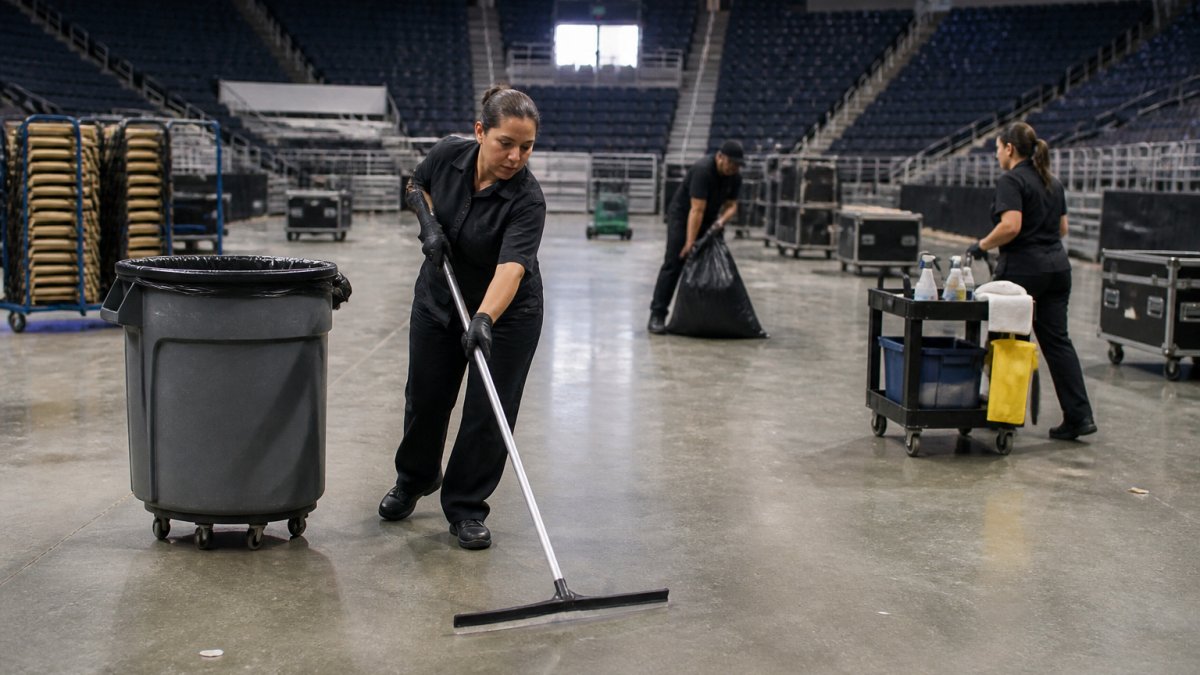
Start by breaking the turnover into phases. Pre-event cleaning happens before guests arrive. During-event maintenance addresses spills and restroom upkeep. Post-event deep cleaning is your major reset window.
For post-event cleaning, sequence matters. You can't mop a floor while chairs are still stacked. You can't sanitize restrooms while people are moving equipment. A logical flow looks like:
- Remove debris and trash (5-10 minutes for a standard ballroom)
- Move furniture and equipment to staging areas (10-20 minutes depending on setup complexity)
- Vacuum and sweep all surfaces (10-15 minutes)
- Clean and sanitize restrooms (10-15 minutes)
- Wipe down surfaces and remove stains (10-15 minutes)
- Final floor treatment and drying (5-10 minutes)
- Reset furniture and final walkthrough (10-15 minutes)
Total typical window: 60-90 minutes for a 5,000-square-foot ballroom with standard turnover needs.
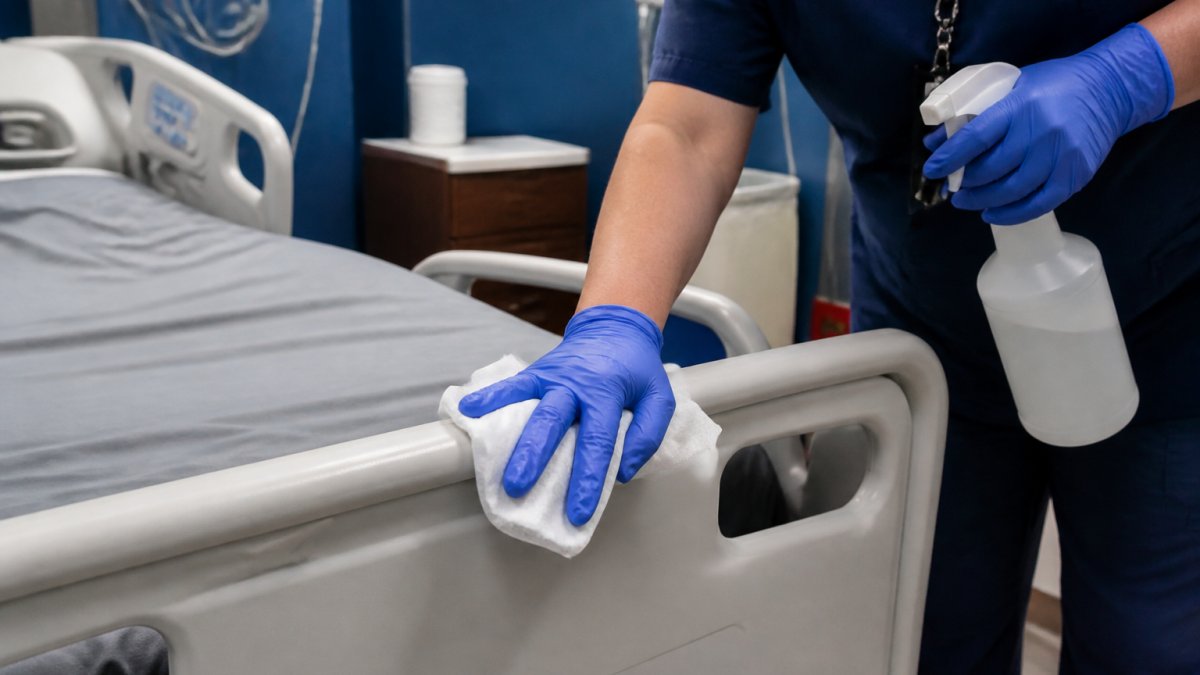
Your schedule should specify dwell times for disinfectants. EPA-registered hospital-grade disinfectants require contact time, typically 10 minutes on hard surfaces (the EPA). If you're using proper disinfection protocols (which healthcare-grade standards demand), your cleaning schedule must account for this. Rushing the dwell time defeats the purpose.
Assign specific crew members to specific zones. One team handles furniture and setup. Another handles restroom sanitation. A third manages floor treatment. Clear zone assignments prevent overlap and confusion.
Build in a 10-minute buffer before the next event begins. Your cleaning crew should finish before guests arrive, not during arrival. That buffer protects your venue's image and gives your team breathing room.
Document this schedule and share it with every staffing provider. When they understand the exact sequence and timing, they can deploy the right crew composition and hit your deadlines consistently.
Deploying Event Setup and Teardown Staff Effectively
Effective event setup and teardown staff deployment starts with clear role definition and ends with verified on-time arrival.
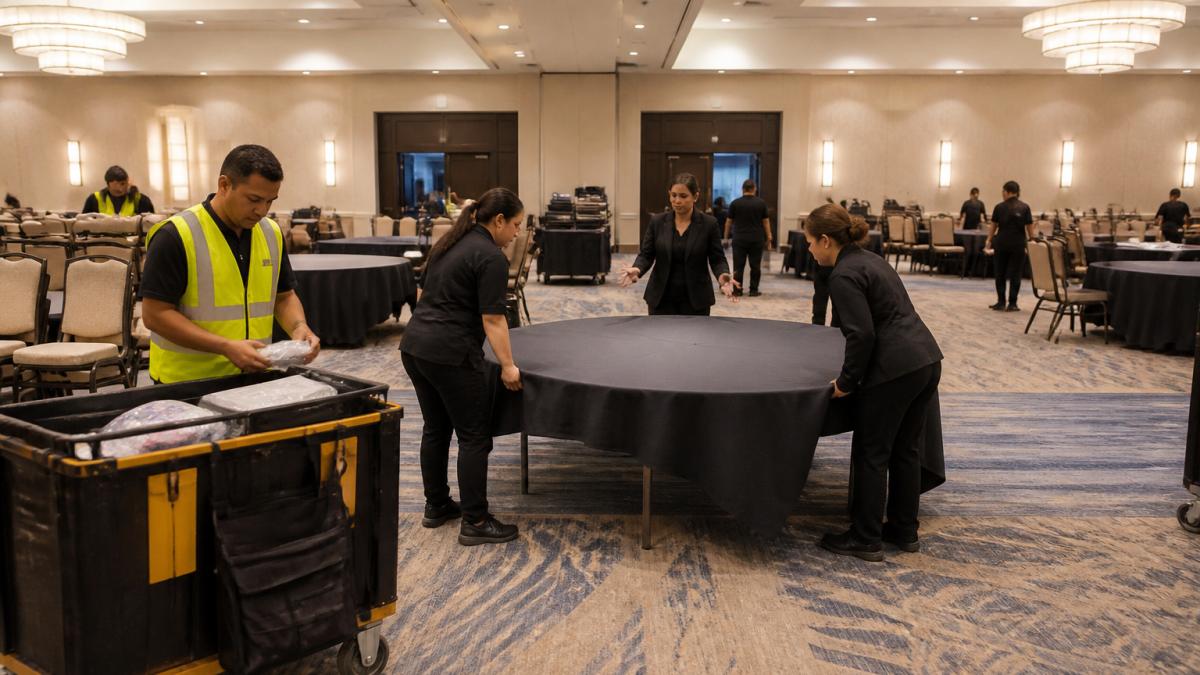
Before deployment day, confirm your staffing request 48 hours in advance. Include event details: venue address, parking and access information, start and end times, exact roles needed, equipment specifications, and any venue-specific protocols.
Assign a site supervisor who owns the turnover. This person communicates with the staffing crew lead, monitors progress against your timeline, and makes real-time decisions. A clear chain of command prevents confusion when issues arise.
Brief your deployed staff on arrival. Even experienced workers need venue-specific orientation: where equipment is stored, how to move items without damaging surfaces, which areas are restricted, and how to handle guest interactions if events overlap. A 10-minute briefing prevents costly mistakes.
Verify crew arrival before your event window starts. No-shows happen. If a crew member doesn't arrive within 15 minutes of start time, your provider should have backup ready.
Monitor progress against your timeline. If setup is running 20 minutes behind, you need to know immediately so you can adjust guest arrival times or add crew. Real-time visibility prevents surprises.
Document what worked and what didn't. If certain crew members performed exceptionally, request them again. If tasks took longer than expected, adjust your timeline for future events. This feedback loop improves your turnovers over time.
Developing Your Rapid-Response Staffing Plan
A rapid-response staffing plan is your playbook for handling workforce disruptions before they become crises.
Start by identifying your staffing provider relationships. Don't wait until you're in crisis mode to find someone.
Ask providers directly: How quickly can you deploy staff? Do you have backup crew available if someone doesn't show? What's your no-show rate? Can you provide the same crew for recurring events, or do I get different people each time?
Build tiered staffing scenarios. What does your plan look like if you lose one person? Three people? Your entire evening shift? Document staffing levels for each scenario, which roles you'd fill first, and which vendors you'd contact.
Create a rapid-request process. When you need emergency staff, can you call and get confirmation within 30 minutes? Do you need to submit written requests? Can you adjust headcount after deployment begins?
Establish communication protocols. Who's your primary contact at your staffing provider? What's their availability? Can they be reached outside business hours? What's the escalation path if your request isn't being met? Clear communication channels prevent delays when you're under pressure.
Set expectations around qualifications. For event turnover staffing, you need people with hospitality experience, not just bodies. Specify that you want experienced crew, background-checked workers, and people familiar with your venue if possible. Quality matters more than speed.
Test your plan. Run a mock scenario where you suddenly need 10 additional staff members. Call your provider, see how they respond, and time their deployment. This real-world test reveals gaps in your plan before a genuine emergency exposes them.
Ensuring Safety, Compliance, and Coordination During Fast Turnovers
Speed doesn't excuse safety. During rapid event turnovers, compliance and coordination become even more critical because the pressure to move fast can tempt shortcuts.
OSHA standards still apply during emergency staffing. Your deployed crew must receive proper safety briefing. If they're handling cleaning chemicals, they need to understand proper ventilation, protective equipment, and dwell times.
Require background checks for all deployed staff. This is non-negotiable for hospitality venues where staff interact with guests and access restricted areas. Verify that your staffing provider screens workers before deployment, not after.
Document crew assignments and timing. Who was assigned to which task? What time did they start and finish? What was the outcome?
Coordinate with your venue's permanent staff. When temporary crew arrives, your existing team needs to know who they are, what they're doing, and how to communicate with them.
Establish clear handoff points. When setup crew finishes, they should formally hand off to cleaning crew. When cleaning finishes, there should be a final walkthrough before the next event begins.
For healthcare facilities or venues requiring OSHA compliance, ensure your staffing provider understands your specific protocols. Hospital-grade disinfection isn't optional, it's a requirement. Your crew must use EPA-registered disinfectants and follow dwell-time standards.
Include contingency communication. If something goes wrong during turnover, equipment breaks, a task takes longer than expected, guest arrival is delayed, how does your crew alert you?
When labor shortages hit your venue, you need more than just bodies filling shifts.
Frequently Asked Questions
How do you staff an event on short notice?
Rapid-response staffing relies on pre-vetted, available workers who can be deployed within hours. Maintain a database of qualified, background-checked staff ready for immediate assignment. Contact your staffing provider with event details, scope, date, time, roles needed, and confirm availability. Qualified workers should arrive with knowledge of your site-specific requirements and safety protocols. The faster your provider can verify worker availability and brief them on your venue's standards, the quicker you fill the gap.
What should an emergency event staffing plan include?
A solid rapid-response staffing plan covers staffing roles (setup, teardown, guest relations, security, culinary, housekeeping), response time commitments, no-show contingencies, worker screening standards, safety and compliance requirements, site-specific protocols, communication workflows, and cost structures. Include contact escalation paths, backup staff pools, and measurable service levels like on-time arrival and task completion rates. Document dwell-time requirements for disinfection and credential verification processes so deployment is smooth under pressure.
How many staff members are needed to turn over an event venue?
Staffing volume depends on venue size, event type, and turnaround time. A hotel ballroom flip between back-to-back conferences may need 15-30 workers; a smaller meeting room might require 4-8. Calculate based on square footage, setup complexity, cleaning depth (standard vs. hospital-grade disinfection), and available hours. Front-of-house roles (guest relations, valet, traffic control) differ from back-of-house (setup crews, culinary, housekeeping). Work with your staffing provider to assess your specific venue and build a staffing model that meets your timeline.
How do you maintain safety and cleanliness during a rapid venue turnover?
Maintain safety through OSHA-trained, background-checked staff briefed on your site-specific safety plan before deployment. Use EPA-registered hospital-grade disinfectants and enforce dwell-time requirements for chemical effectiveness. Assign a supervisor to oversee coordination between setup, teardown, and cleaning crews. Document compliance with credential verification and inspection checklists. Communicate safety protocols clearly, no shortcuts under time pressure. Rapid turnovers don't compromise standards; they demand stricter discipline and pre-planned workflows to ensure nothing is skipped.