 how-to
Managing Event Turnover for Large Venues
Table of Contents
- Understanding Event Turnover in Large Venues
- Creating an Event Venue Turnover Checklist
- Phase 1: Lockout and Walk-Through (0-10 minutes)
- Phase 2: Strip and Clear (10-30 minutes)
- Phase 3: Clean by Zone (30-90 minutes)
- Phase 4: Setup and Configuration (60-120 minutes, overlapping Phase 3)
- Phase 5: Technical Verification (overlapping Phase 4)
- Phase 6: Final Inspection and Release (10-15 minutes)
- Room Configuration and Setup Inspection
- Cleaning, Sanitation, and Disinfection
- Technical and Equipment Verification
- Venue Turnaround Time Between Events
- Developing Your Event Staffing Plan
- Event Cleaning Checklist and Protocols
- Managing Back-to-Back Events and Contingencies
- Measuring Turnover Performance and Efficiency
- Frequently Asked Questions
Last Updated: October 8, 2026
Understanding Event Turnover in Large Venues
Managing event turnover for large venues means preparing a space between back-to-back events, cleaning, setup, staffing, and equipment checks. Speed and quality directly impact your reputation and revenue.
A hotel ballroom hosts a wedding at night, then a corporate breakfast the next morning. At Cleaning Concept Facilities Solutions Services, we have over 13 years of experience in the Tri-State area.
This guide covers the exact systems you need to manage event turnover efficiently and safely.
Creating an Event Venue Turnover Checklist
An event venue turnover checklist is your operational blueprint, but a list alone is not enough.
Use a phased, zone-based workflow. Divide the venue into zones (main floor, restrooms, entry and hallways, back-of-house, technical booth), assign each an owner, and run the phases below in parallel wherever the space allows.
Phase 1: Lockout and Walk-Through (0-10 minutes)
Before cleaning or setup begins, the turnover coordinator walks the space with the previous event's point of contact to catch damage, lost items, or client holds.
- Confirm the previous event has fully released the space
- Note any damage, spills, or missing venue property on a damage log
- Identify any items the client is retrieving (decor, AV, catering equipment)
Skipping this step is the most common cause of damage-charge disputes and crews cleaning around equipment about to be removed.
Phase 2: Strip and Clear (10-30 minutes)
Strike the previous event's setup. This phase is removal, not cleaning.
- Break down tables, chairs, staging, and pipe-and-drape
- Remove linens, skirting, and décor to a staging area
- Clear catering equipment, bars, and service ware to the loading dock
Keep the strip crew separate from the cleaning crew. When the same people do both, they clean around furniture instead of clearing it, doubling the work.
Phase 3: Clean by Zone (30-90 minutes)
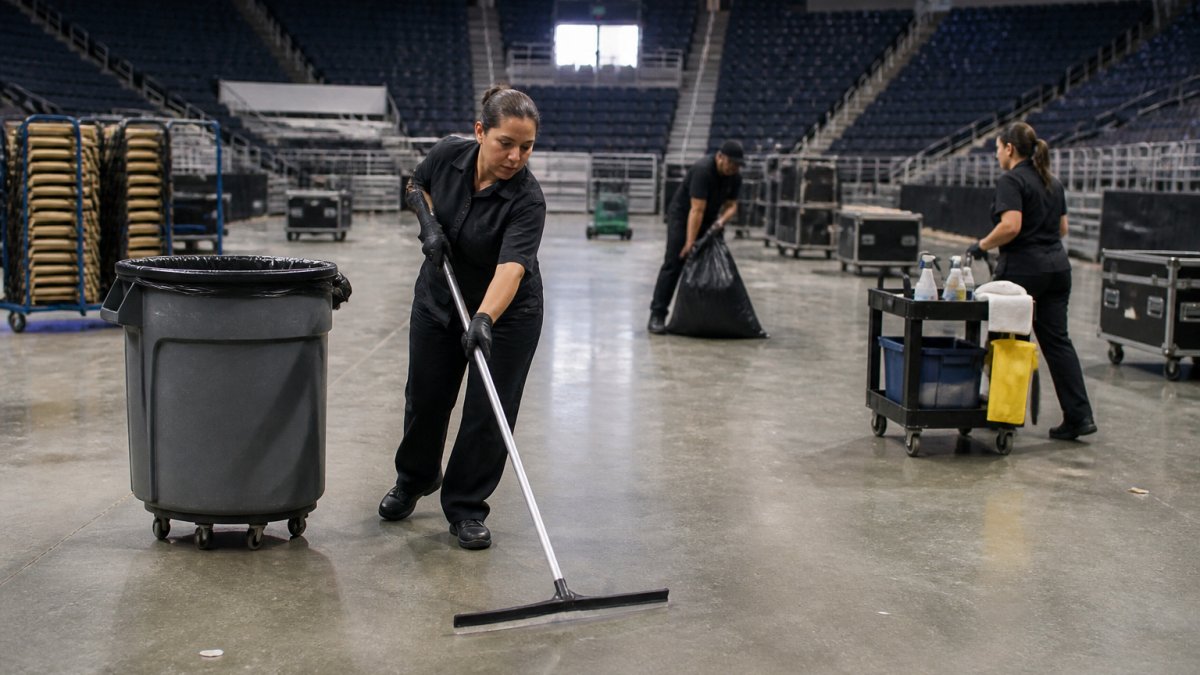
Cleaning runs zone by zone, not task by task. Each cleaner owns a defined area and works top to bottom, back to front.
- Main floor: vacuum or mop, wipe tables and chairs, spot-clean walls and baseboards
- Restrooms: full sanitation cycle, restock paper and soap, empty and reline receptacles
- Entry and hallways: glass, doors, handrails, floor care
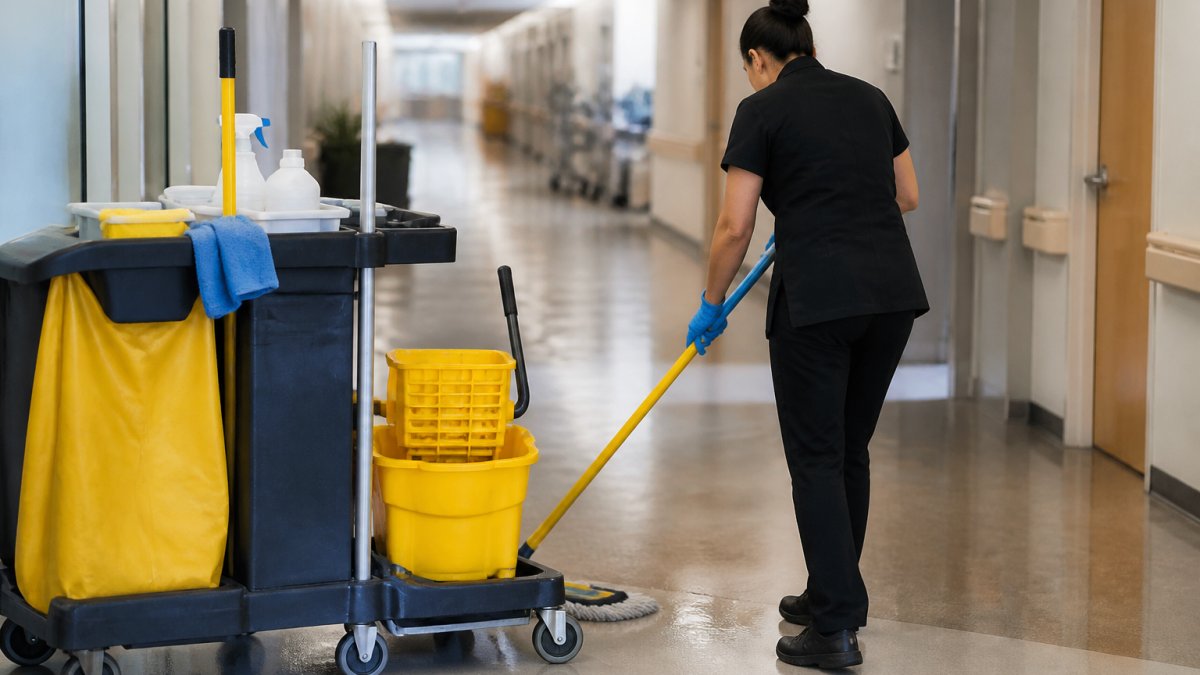
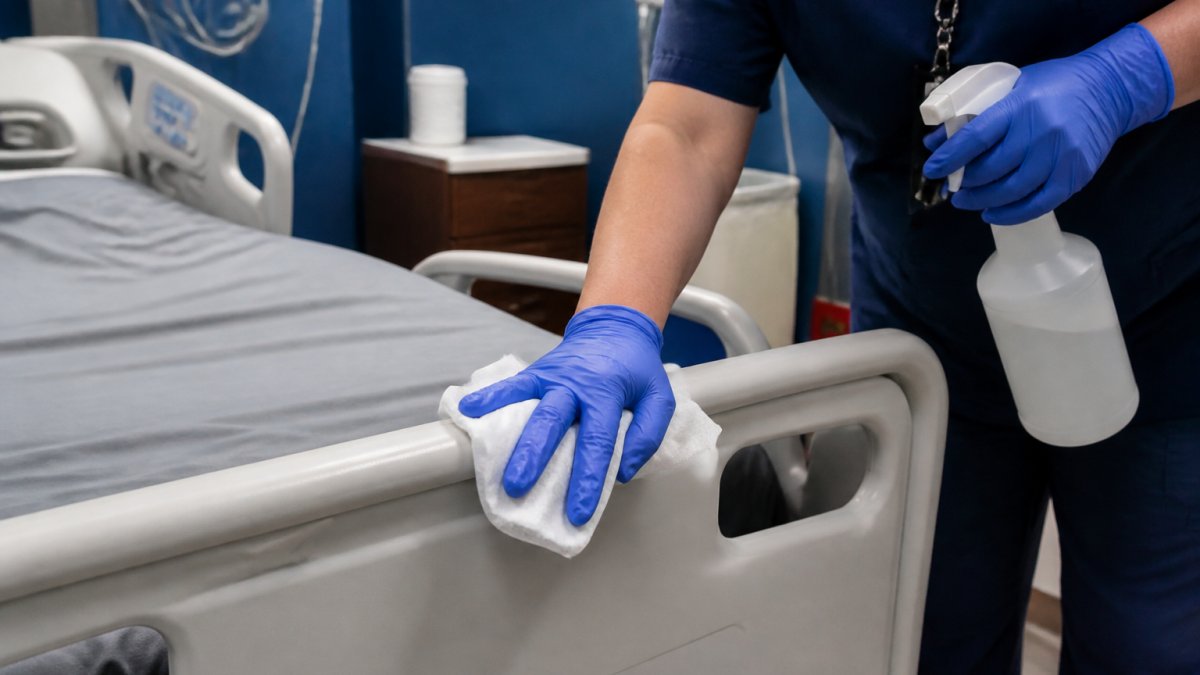
For healthcare-grade standards, use EPA-registered hospital-grade disinfectants and follow the manufacturer's dwell time exactly, wiping before the labeled contact time means the surface was cleaned but not disinfected (the EPA).
Phase 4: Setup and Configuration (60-120 minutes, overlapping Phase 3)
Setup begins in zones that are already clean, the setup crew does not wait for the entire venue.
- Position tables, chairs, and staging per the client's floor plan
- Set linens, skirting, and tabletop décor
- Place signage, registration tables, and directional markers
A misconfigured room wastes time during the event, and clients notice. Verify the floor plan against the physical setup before releasing the room.
Phase 5: Technical Verification (overlapping Phase 4)
One assigned technical specialist handles all AV checks, preventing gaps when three people each assume someone else tested the microphone.
- Power on and test audio, including wireless microphone batteries
- Confirm projectors, screens, and confidence monitors display correctly
- Verify lighting scenes and control presets
Phase 6: Final Inspection and Release (10-15 minutes)
The supervisor walks the completed space against the checklist and floor plan. Nothing is released until this walk is signed off.
- Verify setup matches the approved diagram
- Confirm restrooms are stocked and clean
- Check for tripping hazards, stray cables, and debris
Room Configuration and Setup Inspection
Room configuration is verified twice: during Phase 4 setup and the Phase 6 final walk. The inspection covers tables, chairs, and staging per the floor plan; walls, floors, and baseboards clear of debris; functional lighting; unobstructed exits; and working climate control.
Cleaning, Sanitation, and Disinfection
Cleaning is the most visible part of event turnover, and guests judge your venue on it. The zone-based protocol above covers floors, tables, chairs, railings, glass, restrooms, and high-touch surfaces. For healthcare-grade standards, use EPA-registered hospital-grade disinfectants, follow the labeled dwell time, and document completion by zone with date and time.
Technical and Equipment Verification
Before guests arrive, the technical specialist tests every system listed in Phase 5. A failed microphone or projector ruins an event with no recovery once guests are seated, so assign one person to own these checks.
Venue Turnaround Time Between Events
Venue turnaround time between events is the elapsed time from when one event ends to when the next begins. This window determines how many events you can host in a day and how much revenue you generate, and it varies by event type, venue size, and staffing.
Benchmarks by Event Type and Venue Size
Different events require different reset times. A cocktail reception needs less setup than a formal seated dinner. A small meeting room turns over faster than a 10,000-square-foot ballroom.
Here are typical turnaround windows:
- Small meeting rooms (under 1,000 sq ft): 30-60 minutes
- Medium event spaces (1,000-5,000 sq ft): 60-120 minutes
- Large ballrooms (5,000-10,000 sq ft): 120-180 minutes
These times assume adequate staffing and no major damage; deep cleaning or broken furniture extends the timeline.
Identifying Bottlenecks and Optimizing Workflow
Most venues have one or two tasks that slow the entire turnover. Common bottlenecks include:
- Waiting for cleaning staff to finish before setup begins
- Unclear role assignments causing duplicate work
- Missing equipment or supplies mid-turnover
To identify bottlenecks, time each task during a real transition and look for gaps where one team waits for another. Then redesign the workflow: can cleaning and setup happen simultaneously in different zones? Can you pre-position equipment before the previous event ends?
Developing Your Event Staffing Plan
An event staffing plan details who does what during a turnover, when, and how they coordinate. For a large, multi-room venue, it must also answer two harder questions: how many labor hours each turnover consumes, and how the plan flexes when a reset window compresses.
Role Assignments and Labor Planning
Assign one person to lead the entire turnover, the "turnover coordinator." They own the timeline, resolve conflicts between zones, and are the single point of contact for the client and venue's event manager. Break the work into zones and functions, each with a named owner:
- Zone cleaners: Assigned to specific areas (main floor, restrooms, hallways, back-of-house)
- Setup crew: Arranges furniture and décor for the next event
- Technical specialist: Tests and configures audio, visual, and lighting systems
For a large ballroom in the 10,000-square-foot range, a common staffing pattern is:
- 1 turnover coordinator
- 4-6 zone cleaners
- 2-3 setup crew members
That is roughly 9-12 people for a full reset. Smaller venues need fewer people but still require explicit role assignments, assign every task by name on the shift sheet.
Estimating Labor Hours per Turnover
Labor is the largest controllable cost in a turnover, so estimate it before the event is booked. Build the estimate from your checklist phase times: cleaning minutes per zone, setup minutes from floor plan complexity, largely fixed technical check time, and coordinator and supervisor time across the full window.
Shift Handoffs and Communication During Changeover
Large venues often run turnovers across shift changes, where information gets lost. A written handoff prevents the incoming crew from re-doing work or missing a zone.
- Pre-turnover briefing: Meet 15 minutes before the previous event ends. Review the checklist, assign zones by name, confirm the next event's timeline.
- Written handoff sheet: At any shift change, the outgoing lead records complete zones, in-progress zones, and open issues. The incoming lead signs it.
- Radios or a group channel: Keep the coordinator and supervisor in constant contact and escalate problems immediately.
Flexing the Plan When the Window Compresses
When a turnover window shrinks, a late-running event, short-notice booking, or same-day double-booking, the plan must flex without sacrificing non-negotiables. Rank tasks in advance:
- Non-negotiable: restroom sanitation, floor safety, fire exits clear, technical systems tested, setup matching the floor plan
- Deferrable: deep-cleaning secondary areas, decorative detailing, non-essential signage
- Call-in eligible: identify in advance which off-shift employees can be reached on short notice and what they are qualified to do
When you compress, add people to the critical-path zones rather than spreading extra staff evenly. Two additional cleaners in the main floor zone usually recover more time than one extra person in each of five zones.
Supervision and Quality Control
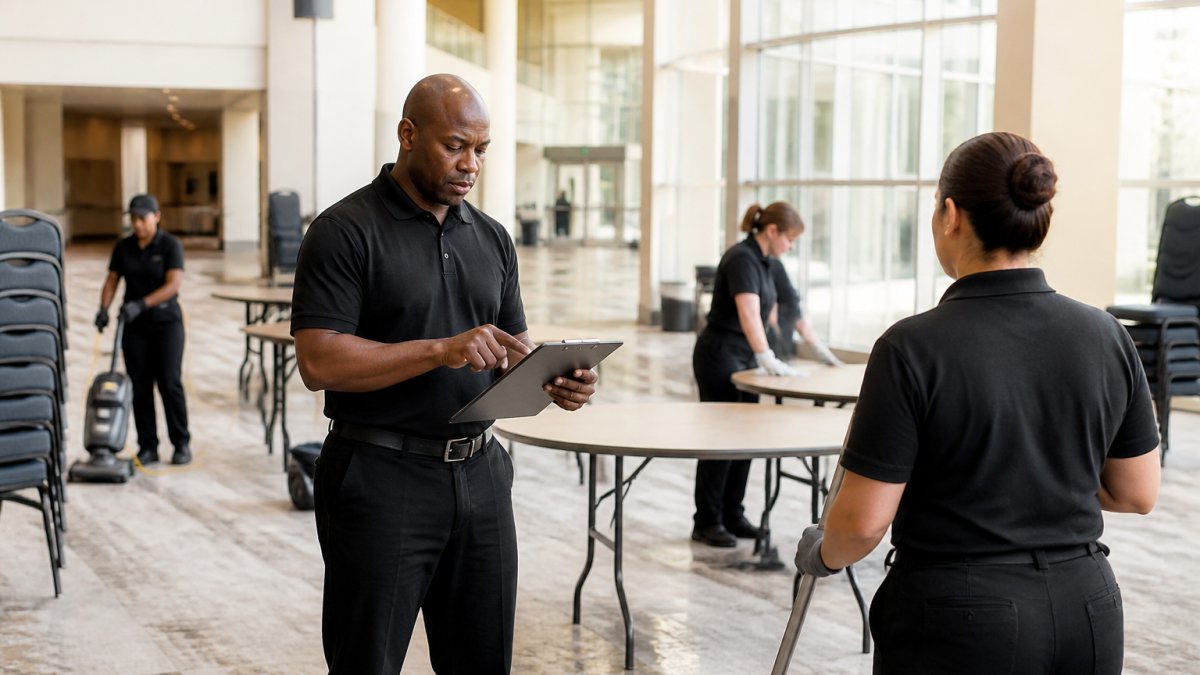
The supervisor walks each completed zone before the next event starts, spotting issues immediately, a missed corner, crooked furniture, an unstocked restroom. Fixing these before guests arrive costs minutes; after, it costs the client relationship.
Event Cleaning Checklist and Protocols
A detailed event cleaning checklist ensures no area is missed. It also protects you legally if a health or safety issue arises, you can prove you followed protocols.
Healthcare-Grade Standards and Compliance
Healthcare-grade cleaning means using EPA-registered hospital-grade disinfectants and following evidence-based protocols, critical for medical offices, hospitals, and any facility where infection control is required.
Your disinfection protocol should include:
- Pre-cleaning surfaces with soap and water first
- Applying hospital-grade disinfectant to all high-touch surfaces
- Allowing proper dwell time (usually 3-10 minutes depending on the product) (the EPA)
High-touch surfaces include door handles and push plates, handrails, light switches, elevator buttons, restroom fixtures, and table edges and chair backs.
Safety, Sanitation, and Inspection Procedures
Before the next event starts, conduct a final safety and sanitation inspection. Walk the entire venue and check:
- No tripping hazards or debris on floors
- All electrical cords properly routed and safe
- Restrooms fully stocked and clean
Document this inspection on a form with date, time, inspector name, and any issues found. Keep records at least 30 days, they prove you maintained standards and help identify recurring problems.
Managing Back-to-Back Events and Contingencies
Back-to-back events are common in large venues and risky, a delay in one cascades into the next.
Overlapping Event Scheduling and Risk Mitigation
When events overlap, you need a contingency plan for a first event running 30 minutes late or cleaning taking longer than expected. Build buffer time into your schedule:
- At least 15-20 minutes of buffer between events
- 30-45 minutes for high-stakes events (medical conferences, major corporate functions)
- 10-15 minutes for back-to-back events with minimal setup changes
Communicate buffer time clearly to clients when booking and be honest about what's realistic, overselling your turnover speed damages your reputation.
Contingency Planning for Delays and Staffing Issues
Despite planning, delays happen. A pipe bursts. A staff member calls in sick. The previous event runs late.
Develop contingency procedures:
- If cleaning runs behind: Prioritize high-visibility areas first. Restrooms, entryways, and the main event space. Secondary areas can be finished after the event starts if necessary.
- If staffing is short: Reduce the scope of setup. Use simpler configurations. Postpone non-essential tasks.
- If equipment fails: Have backup equipment on hand or know which rental companies you can call immediately.
Have a backup staffing plan: identify non-negotiable tasks, tasks that can be skipped when short-handed, and employees who can be called in on short notice.
Measuring Turnover Performance and Efficiency
Track your turnover metrics to identify trends and improvements. Key performance indicators:
- Actual turnaround time: How long each turnover actually takes
- On-time completion rate: Percentage of turnovers finished by the scheduled deadline
- Quality score: Results from post-event inspections (cleanliness, setup accuracy, technical function)
Review these metrics monthly and look for patterns. If turnaround times are increasing, investigate why, more complex events, declining staffing, new bottlenecks.
Managing event turnover for large venues requires coordination, clear procedures, and reliable staffing. The systems you put in place directly impact your revenue, client satisfaction, and reputation.
Frequently Asked Questions
What should be included in an event venue turnover checklist?
A comprehensive event venue turnover checklist covers room configuration and floor plan reset, deep cleaning and disinfection of all surfaces, inspection of sound and lighting equipment, verification of furniture and fixture placement, restocking of supplies, and a final walkthrough for safety and compliance. Healthcare-grade disinfection is essential for high-traffic areas. Document each completed task with timestamps to maintain accountability and ensure no steps are missed during rapid changeovers.
How long should venue turnaround time between events take?
Turnaround time depends on event type, venue size, and cleaning requirements. Turnaround time varies by event type, venue size, and cleaning requirements. Establish benchmarks specific to your venue layout and event mix. Track actual times weekly to identify delays and optimize staffing allocation. Professional facility management partners can reduce turnaround time through streamlined processes and trained teams.
How many staff members are needed for an event staffing plan during turnover?
Staffing requirements vary by venue size and event complexity. Assign specific roles: setup crew, cleaning team, technical staff, and a supervisor. Dedicated event staffing plans that match personnel to specific tasks reduce downtime and ensure compliance with site-specific protocols and dwell-time requirements for disinfection.
How do you maintain safety and cleanliness during back-to-back events?
Maintain safety and cleanliness by staggering event times to allow adequate turnover windows, assigning dedicated cleaning zones to prevent cross-contamination, using EPA-registered hospital-grade disinfectants with documented dwell times, and conducting pre-event safety inspections. Implement contingency protocols for delays, including backup staff and equipment. Regular staff training on OSHA compliance and site-specific procedures ensures consistent standards. Continuous monitoring and real-time communication between cleaning and event teams prevent gaps in coverage during rapid changeovers.