 how-to
Hospital-Grade Disinfectant Dwell Time Requirements
Table of Contents
- What Dwell Time Means for Hospital-Grade Disinfectants
- Understanding Disinfectant Contact Time and Its Role in Pathogen Control
- Maintaining Wet Contact Time for Disinfectants on Environmental Surfaces
- Reading and Following EPA-Registered Hospital Disinfectant Label Directions
- Practical Workflow for Achieving and Verifying Dwell Time Compliance
- Using a Disinfectant Contact Time Audit Checklist for Staff Accountability
- Troubleshooting Common Dwell Time Failures and Real-World Challenges
- Conclusion
- Frequently Asked Questions
Last Updated: October 10, 2026
What Dwell Time Means for Hospital-Grade Disinfectants
Disinfectant dwell time is the amount of time a surface must stay wet with disinfectant solution to kill the target organism. It's not how long the product sits on a shelf.
This matters because dwell time determines whether your disinfection actually works. A hospital-grade disinfectant might kill 99.99% of bacteria, but only if it contacts the surface for the required duration. Apply it and wipe it dry in 30 seconds when the label says 10 minutes?
At Cleaning Concept Facilities Solutions Services, we work with facility teams across healthcare, hospitality, and industrial settings. The single most common compliance failure we see is staff rushing through disinfection without maintaining wet contact time. They think they're saving time. They're actually creating liability.
The reason this matters now is regulatory pressure. OSHA expects your facility to follow manufacturer instructions. EPA-registered hospital disinfectants carry specific organism claims tied to specific contact times (the EPA).
Understanding Disinfectant Contact Time and Its Role in Pathogen Control
Contact time and dwell time are the same thing in practical terms. The EPA-registered disinfectant label lists contact time as the minimum duration the surface must remain wet with the solution to achieve the claimed kill rate for specific pathogens.
Different organisms require different contact times:
- Bacteria on hard surfaces: often 1-10 minutes
- Viruses like influenza: often 1-15 minutes
- Fungal spores: often 10-30 minutes
- C. difficile spores: often 10-60 minutes depending on the product
The contact time exists because pathogen destruction is not instantaneous. The disinfectant chemistry needs time to penetrate cell walls, disrupt membranes, and denature proteins. Shorter contact times work for easier-to-kill organisms. Tougher pathogens, especially spore-forming bacteria, require longer exposure.
This is why reading the label is non-negotiable. The manufacturer has tested the product against specific organisms at specific contact times under controlled conditions. Those claims are registered with the EPA. Your facility's responsibility is to follow those exact parameters.
Maintaining Wet Contact Time for Disinfectants on Environmental Surfaces
Keeping a surface visibly wet for the full contact time is the hardest part of disinfection in real-world conditions. Surfaces dry. Temperature affects evaporation. Humidity plays a role. Staff move fast. This is where most facilities struggle.
The practical workflow is simple in theory, difficult in execution:
- Pre-clean the surface to remove visible soil and organic matter
- Apply the disinfectant generously until the surface is visibly wet
- Do not touch or wipe the surface during the contact time period
- Keep the surface wet, reapply if it starts to dry before the contact time is complete
- Wipe or allow to air dry only after the contact time has elapsed
The "keep it wet" step is where most protocols fail. Staff see a surface that's still damp and assume it's ready. Damp is not wet. Wet means visible moisture.
Pre-cleaning matters because organic matter, blood, body fluids, soil, interferes with disinfectant contact (the CDC). The chemical spends time breaking down the soil instead of killing the pathogen.
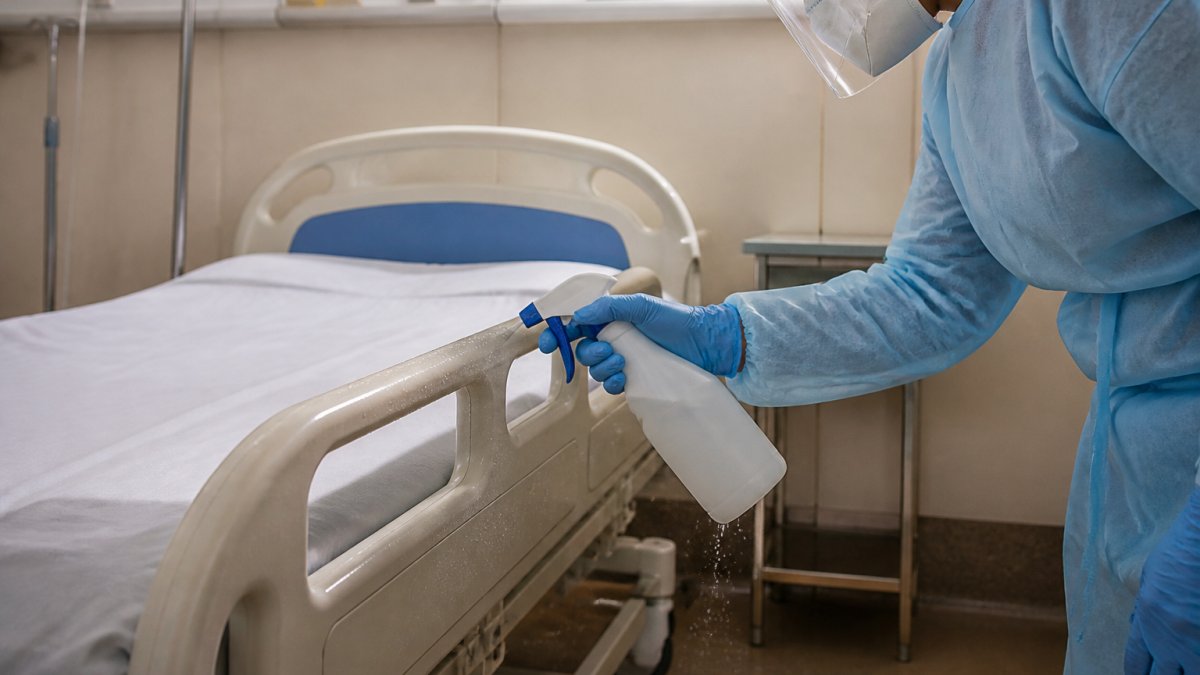
Reapplication during the contact time is legitimate. If a surface dries before the required time has passed, spray it again. Restart the contact time clock from that point.
Reading and Following EPA-Registered Hospital Disinfectant Label Directions
Every EPA-registered hospital-grade disinfectant label contains the same critical information in a specific format. Learning to read it correctly is your first compliance tool.
The label lists:
- Active ingredients with percentage concentrations
- Organism claims (bacteria, viruses, fungi, spores by specific species or genus)
- Contact time for each organism claim, this is the key number
- Surface compatibility, what materials the product is safe for
- Dilution instructions if the product is a concentrate
- Application method, spray, wipe, immersion
- Personal protective equipment requirements
- Ventilation requirements
- Storage and shelf-life information
The organism claim section is the most important for your facility. It tells you exactly what this product kills and how long it takes. If your facility needs to disinfect against influenza virus, find "Influenza A virus" on the label. Read the contact time listed next to it. That's your required dwell time.
Many facilities buy a product because "it's hospital-grade" without checking if it has the organism claims they actually need. A disinfectant might kill bacteria in 5 minutes but require 30 minutes for the virus you're targeting. If your staff uses the 5-minute protocol, you're not protected against that virus.
Practical Workflow for Achieving and Verifying Dwell Time Compliance
Creating a workflow is one thing. Verifying that staff actually follow it is another. This section covers both.
The workflow itself breaks into five steps:
Step 1: Inspect the surface, Remove visible debris, dust, or gross contamination with a dry cloth or brush. This is pre-cleaning.
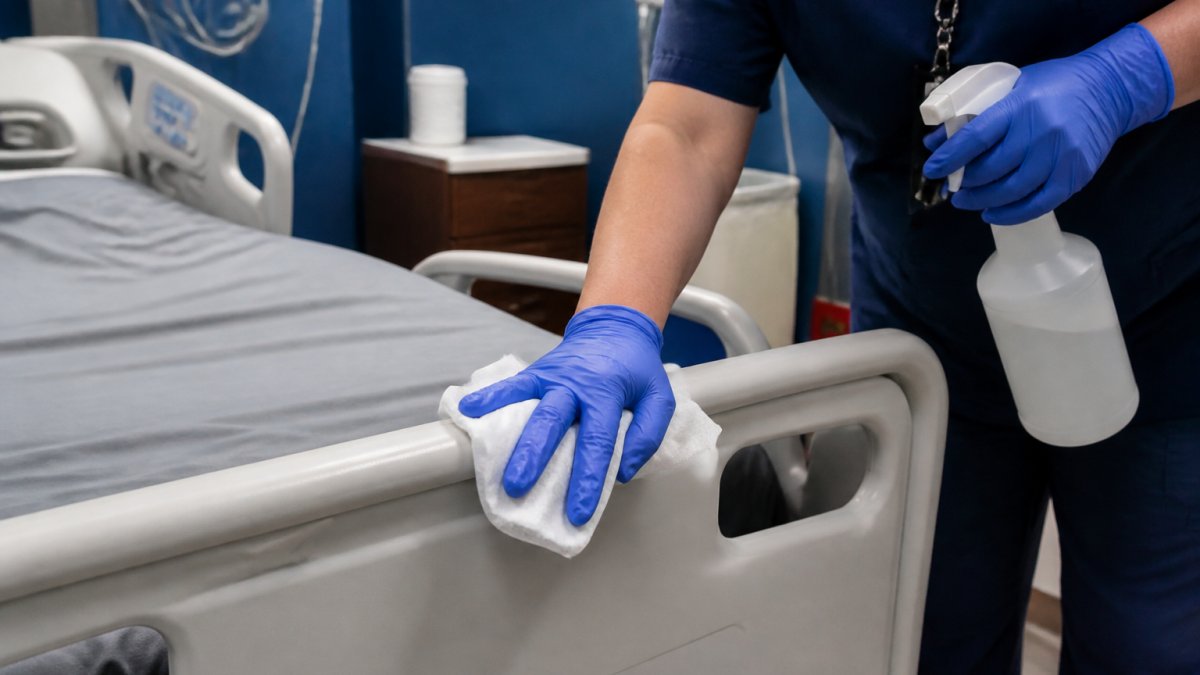
Step 2: Apply disinfectant, Spray or wipe the EPA-registered hospital disinfectant generously until the surface is visibly wet. Use enough product to maintain moisture.
Step 3: Set a timer, Use your phone, a wall clock, or a visible timer. Do not rely on memory. The contact time starts now.
Step 4: Keep the surface wet, Check the surface every 2-3 minutes. If it's drying, reapply disinfectant. Restart the timer if you reapply.
Step 5: Allow to dry or wipe, Once the contact time has elapsed, you can allow the surface to air dry or wipe it dry with a clean cloth. The disinfection is complete.
Documentation is critical for compliance verification. Your facility should maintain records showing:
- Date and time of disinfection
- Surface or area disinfected
- Product name and EPA registration number
- Contact time applied
- Staff member who performed the work
This documentation protects your facility during an audit or incident investigation. It proves you followed the protocol.
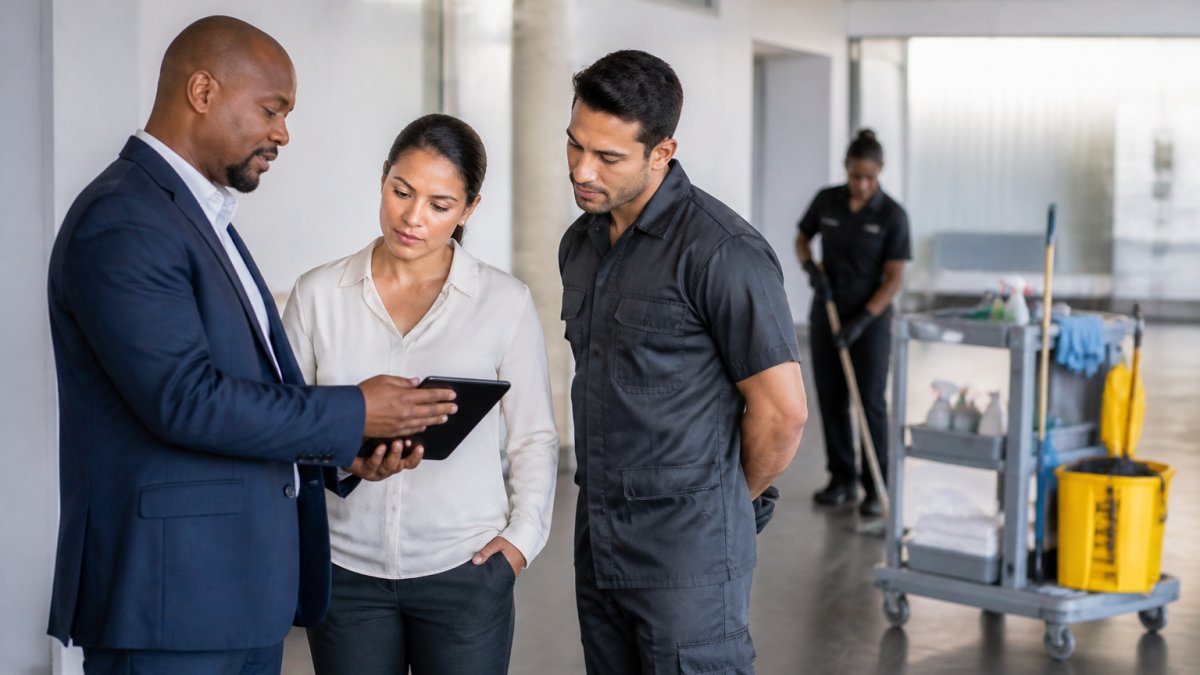
Verification in real-time requires observation. A supervisor or facility manager should periodically observe staff performing disinfection. Check that they're:
- Using the correct product for the target organism
- Maintaining visible wetness for the full contact time
- Not rushing through the protocol
- Following pre-cleaning steps
Many facilities use a disinfectant contact time audit checklist to standardize this verification.
Using a Disinfectant Contact Time Audit Checklist for Staff Accountability
An audit checklist turns compliance into a measurable, repeatable process. It removes guesswork and creates accountability.
Here's a practical checklist your facility can adapt:
| Item | Compliance Check | Frequency |
|---|---|---|
| Pre-cleaning completed | Visible soil removed before disinfectant applied | Every application |
| Correct product selected | EPA-registered product matches target organism claim on label | Every application |
| Contact time identified | Label contact time for specific organism documented | Every application |
| Disinfectant applied generously | Surface visibly wet, not just damp | Every application |
| Timer set and visible | Staff member can see countdown or elapsed time | Every application |
| Surface kept wet | Reapplication performed if surface dries before contact time ends | Every application |
| Contact time maintained | Full required time elapsed before wiping or air drying | Every application |
| Documentation recorded | Date, time, product, contact time, staff name logged | Every application |
Use this checklist during spot audits. Have a supervisor observe a staff member performing disinfection and check off each item. If any item fails, stop and correct the protocol before continuing.
Accountability comes from consistent auditing and feedback. If staff know their work is being checked, compliance improves. If they know no one is watching, shortcuts happen.
Troubleshooting Common Dwell Time Failures and Real-World Challenges
Dwell time failures happen for predictable reasons. Understanding them helps you prevent them.
Challenge: Surfaces dry too fast
This happens in warm, dry environments or with porous surfaces.
Solution: Apply disinfectant more generously. Use a spray bottle that produces larger droplets, not a fine mist.
Challenge: Staff don't understand why contact time matters
If your team doesn't know the "why," they'll cut corners when you're not watching.
Solution: Train staff on pathogen biology. Explain that disinfectant kills by chemical action, and that action takes time.
Challenge: High-touch surfaces are disinfected multiple times daily
This creates a logistical problem.
Solution: Consider rotating surfaces. Disinfect high-touch areas on a staggered schedule so not everything needs contact time simultaneously.
Challenge: Different products have different contact times
If your facility uses multiple disinfectants, staff can confuse contact times.
Solution: Standardize on one or two products if possible.
Challenge: Diluted concentrates lose efficacy if prepared incorrectly
If a concentrate is diluted too heavily, the contact time on the label no longer applies.
Solution: Use ready-to-use products when possible to eliminate dilution errors. If concentrates are necessary, use measuring tools, not eyeballing.
Conclusion
Hospital-grade disinfectant dwell time is not optional. It's the foundation of effective environmental disinfection in healthcare, hospitality, and industrial settings. Your facility's compliance depends on understanding what dwell time is, reading the EPA-registered label correctly, and maintaining wet contact time in real-world conditions.
The challenge is execution. Dwell time compliance requires consistent training, observable protocols, and accountability. At Cleaning Concept Facilities Solutions Services, we've built our disinfection protocols around these principles. Our OSHA-trained, background-checked teams follow manufacturer instructions precisely, maintain documented contact times for every disinfected surface, and use EPA-registered hospital-grade disinfectants with verified organism claims. We help your facility meet compliance requirements while protecting staff and patient safety.
Get a quote from Cleaning Concept Facilities Solutions Services today and ensure your facility's disinfection protocols meet current standards. Our team brings 13 years of Tri-State area experience in healthcare-grade facility care, with CHESP and T-CSCT certified leadership dedicated to your compliance and safety.
Frequently Asked Questions
What does dwell time mean for a hospital-grade disinfectant?
Dwell time is the length of time a surface must remain visibly wet with the disinfectant solution to kill target pathogens. This is also called contact time or wet contact time. The manufacturer specifies the required dwell time on the product label based on EPA registration and testing against specific organisms, bacteria, viruses, fungi, or spores. If a surface dries before dwell time expires, disinfection is incomplete and reapplication is necessary. Dwell time varies by product and pathogen; a hospital-grade disinfectant registered for tuberculosis may require 10 minutes, while another registered for norovirus may require 1 minute.
How do you find the required contact time for a disinfectant?
Check the product label under the organism claims section. The EPA-registered label lists each pathogen (bacteria, virus, fungus, or spore) the disinfectant kills, along with the contact time required for that organism. For example, the label may state 'Kills Staphylococcus aureus in 30 seconds' and 'Kills norovirus in 1 minute.' If you need to disinfect for multiple pathogens, use the longest contact time listed. Always consult the manufacturer's instructions and your facility's site-specific protocol, which may require longer dwell times based on soil load or surface type.
Does a surface need to stay visibly wet for the full disinfectant contact time?
Yes. The EPA requires that surfaces remain visibly wet throughout the entire contact time specified on the label. If a surface dries before contact time is complete, the disinfectant cannot reach and kill all target pathogens. This is why drying time (the time it takes for a surface to air-dry after disinfection is complete) is different from contact time. Staff must monitor surfaces, reapply disinfectant if needed to maintain visible wetness, and only allow the surface to dry after the full contact time has passed. Pre-cleaning to remove soil and organic matter helps reduce evaporation and ensures the disinfectant stays wet longer.
What should staff do if a surface dries before the contact time is complete?
Reapply the disinfectant immediately and restart the contact time clock. Disinfection did not occur on the dried portion of the surface. To prevent this in the future, reduce the application area, increase the amount of disinfectant applied, improve ventilation control (excessive airflow accelerates drying), or switch to a ready-to-use solution with a shorter contact time if available. Document the failure in your facility protocol and adjust staff training to address the specific condition, whether it was high-traffic area airflow, temperature, or application technique. High-touch surfaces in busy areas may require more frequent reapplication checks.